A GUIDE TO:
SINGLE, TWO AND THREE PHASE POWER
Single-Phase
Two-Phase
Three-Phase
A Practical Guide for Australian Homes and Businesses
Understanding your property’s electrical supply is essential if you’re planning an EV charger, solar system, heat pump, workshop upgrade, or simply want to know what your home or business can safely handle. In Australia, power supplies are typically single-phase, two-phase (dual-phase), or three-phase. Most suburban homes run on single-phase, while larger homes, rural properties, and businesses often have two or three phases.
Here’s how to work out what you have - safely and simply.
1, 2 or 3 PHASE

1P
Most homes, apartments, small loads
Single-phase homes can usually install a 7 kW wallbox charger without issues (great for overnight top-ups of 30–50 km of range per hour).
2P
Some older or regional homes, moderate extra capacity
Higher than single, but most chargers will not work on two phases, so connect to one of the phases ~7.4kW. Speak to electrician.
3P
Larger homes, workshops, fast charging, commercial
Commonly 11kW (16A) to 22 kW (32A per phase) - the gold standard for faster charging. It comfortably supports 11 kW and 22 kW wallboxes, making it ideal for homes with multiple EVs, business fleets, or anyone who wants shorter charging sessions.
How to Check What You Have (Step-by-Step)
Safety first: You can do a visual inspection without touching anything. If the panel is sealed, locked, or you’re unsure, call a licensed electrician. Never remove covers or poke around if you’re not qualified - electricity can kill.

Smart Meter
-
Single-phase usually shows one main consumption figure.
-
Two or three-phase often shows multiple readings or labels like L1, L2, L3 (or 01, 02, 03).
-
Your smart meter screen may scroll through phases or display text such as “1 Phase”, “3 Phase”, or icons with multiple “L” labels

Main Switchboard (Meter Box)

Single Lever (single Phase)

Two linked levers (Usually two-phase)

Three linked wide levers - wide body
(Usually Three phase)
WHY THIS MATTERS
-
Single-phase power is like a single-lane road - perfectly fine for everyday use, but it can struggle when multiple high-power appliances run at the same time.
-
Three-phase power is like a three-lane freeway - it offers much higher capacity and smoother delivery, making it ideal for fast EV charging and heavy household loads.
Every home has a limit on how much electricity can safely enter at once. This limit is set by your main breaker (also called the main switch or service fuse). If you exceed it, the breaker will trip.
For example, a common single-phase home in Australia has a 63A main breaker. This gives you roughly: 230V × 63A = 14.5 kW of available power.
Here’s how much power typical appliances use:
-
Kettle: ~2.0 kW (short, high burst)
-
Tumble dryer: ~2.0 kW (intermittent)
-
Reverse-cycle air conditioner: 1.0 – 4.0 kW (intermittent)
-
Electric oven: ~3.0 – 5.0 kW (when heating)
-
EV charger (single-phase): ~7.0 kW (continuous)
If several of these appliances are running at the same time, you can quickly approach or exceed your 14.5 kW limit - especially when charging an EV. This is where load management or upgrading to three-phase becomes valuable.

NAVIGATING POWER DEMAND
Time selective charging
Many EV owners prefer to charge overnight, when household electricity demand is at its lowest. This is also when many energy plans offer cheaper off-peak tariffs, making it one of the most cost-effective times to charge.
Load Management
If you want the freedom to charge whenever you like, or if your home has other high-power loads such as a pool or multiple air conditioners, a load-managed charger is often the ideal solution.
These smart chargers continuously monitor your home’s total electricity demand. They automatically increase charging speed when spare capacity is available and reduce it during periods of high household usage - allowing you to charge efficiently without overloading your electrical system or requiring a costly upgrade.
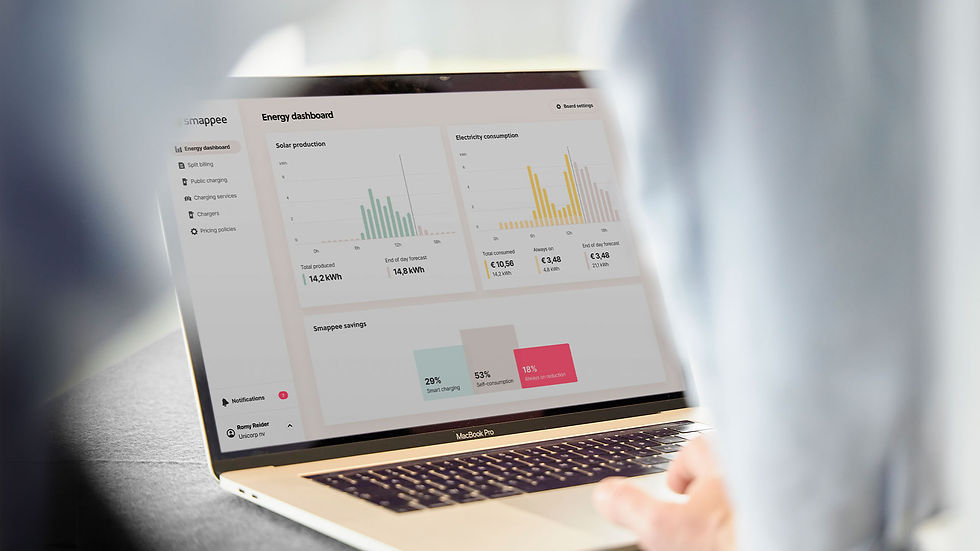
We partner with Smappee, a world leader in home energy management, to offer this capability. The Smappee Infinity Smart Kit is available as an optional add-on for compatible chargers and can be purchased together with your charger from our online store.
Upgrading to three-phase
Upgrading an existing home to three-phase power can be expensive. While three-phase supply does offer greater flexibility and capacity, many households achieve excellent results by managing their single-phase power more intelligently - through off-peak charging and load management - without the significant cost of an upgrade.